The Quiet Plant-Based Defaults Movement
Imagine a world where sustainable eating isn’t a choice, but the delightful default. In 2025, a group of passionate student leaders is bringing this vision to life, one dining hall at a time.
The Better Food Foundation’s DefaultVeg Internship isn’t just a program—it’s a movement. By applying sophisticated behavioral science strategies, these interns are proving that changing food systems can be seamless, engaging, and even fun.
How Defaults Work Their Magic
Think of defaults as gentle nudges. When plant-based meals become the standard, students don’t feel restricted—they feel empowered. Take Emi Brennan at UC San Diego, who transformed a sociology colloquium by making 4 out of 6 pizzas vegetarian. The result? All meat pizzas were left untouched.
The Better Food Foundation (BFF) continues to partner with forward-thinking students, faculty, and universities to implement plant-based defaults, making plant-based foods the easiest and best choice for campuses and surrounding communities. Plant-based Defaults are helping campuses reduce food-related carbon emissions, lower water and land use, and make food accessible for everyone.
Beyond Numbers: Changing Narratives
“Plant-based defaults represent a powerful intersection of environmental sustainability, health, and accessibility,” says Jennifer Channin, Executive Director of the Better Food Foundation. “What’s noteworthy is the students are dramatically shifting consumption patterns towards more sustainable options and changing the narrative on plant-forward dining, making it easy and accessible for everyone.”
The 2025 List of Plant-Based Transformations by DefaultVeg Interns
Susan Oseguera: California State University, Los Angeles
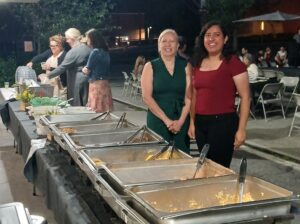
New Roots Institute Fellow Susan Oseguera successfully advocated for the Department of Nutrition and Food Science to adopt a plant-based default menu for their annual Honors Graduation Celebration.
While animal product options remained available, plant-based dishes took center stage. Susan’s pitch emphasized inclusivity across dietary needs, helping create allergen information cards to ensure all students can dine safely and confidently.
(Photo: CAL State Department of Nutrition and Food Science Honors Graduation Celebration)
Hope Dragseth: Scripps College, Claremont, CA
DefaultVeg Intern Hope Dragseth led a remarkable campaign that gathered signatures from 20% of the student body (approximately 200 students) to remove environmentally harmful shrimp from the Mallott dining hall menu. These signatures and her club’s op-ed in the Scripps Voice influenced the dining service to employ a subtle substitution, replacing shrimp dishes with similar tofu options, maintaining menu variety while reducing environmental impact.
Hope also secured an entirely plant-based menu for the Scripps Sustainability Summit, where over 50 attendees enjoyed sustainable dining throughout the event.
Bang Nguyen: Houston Community Climate Summit, Houston, TX
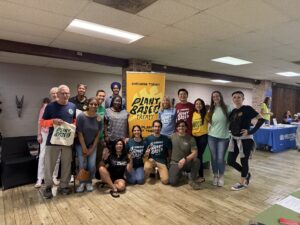
Plant Based Treaty and DefaultVeg volunteer Bang Nguyen successfully advocated for the Houston Community Climate Summit to offer a plant-based by default menu. The event registration invitation clearly stated:
“As part of our commitment to reducing environmental impact, conserving resources, and promoting a sustainable and just food system, delicious plant-based meals will be served by default at this summit. Chicken or gluten-free may be provided upon request. We will do our best to accommodate.”
This powerful default language demonstrates how campus activism can extend into broader community climate events.
Gabriella Parada Ramirez: Burbank City Council, Los Angeles, CA
DefaultVeg and Plant Based Treaty Intern Gabriella Parada Ramirez took her advocacy beyond the campus by delivering a compelling testimony to the Burbank City Council on the critical importance of plant-based food systems for climate action.
Her presentation highlighted how municipal policies can support more sustainable food choices, demonstrating how student leaders are influencing not only their campuses but also local government decision-making. Thanks in part to her testimony, the Burbank City Council is moving forward with the Plant Based Treaty.
Hannah Hughes: Pomona College, Claremont, CA
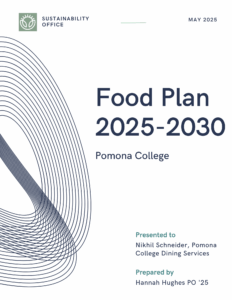 Following the success of earlier plant-based default campaigns at Pomona College, DefaultVeg Intern Hannah Hughes developed a comprehensive Sustainable Food Plan that the university’s Sustainability Office plans to incorporate into its official sustainability goals for the 2025-2026 academic year.
This institutional commitment ensures that plant-forward dining will become a lasting part of the campus culture rather than a temporary initiative.
Rebecca Zewdie: American University, Washington, DC
 After months of strategic conversations with campus dining services at American University, New Roots Institute Fellows Rebecca Zewdie and Sophie Cazares convinced the popular Davenport Coffee Lounge, known to students as “The Dav,” to eliminate the upcharge for plant-based milks.
This change makes sustainable, dairy-free options financially accessible to all students, removing a significant barrier to climate-friendly choices.
Cheyenne Klapper: University of Virginia, Charlottesville, VA
Intern Cheyenne Klapper successfully implemented plant-based defaults at the University of Virginia’s campus Hillel, demonstrating how cultural and religious organizations can adopt sustainable dining practices while honoring their traditions. The plant-based Shabbat celebration showcased how defaults can work within diverse community contexts.
Amber Trares: Kent State University
After noticing the lack of plant-based options at Kent State University’s recreation and wellness center, DefaultVeg intern Amber Trares surveyed to assess student interest in adding plant-based options. She then used survey responses to convince Kent State’s Recreation and Wellness Center to add plant-based yogurt and protein shakes to their menu.
Emi Brennan: University of California, San Diego
At UCSD, DefaultVeg Intern and New Roots Institute Fellow, Emi Brennan successfully piloted plant-based defaults in two academic departments. During the Sociology Colloquium, she implemented a nudge strategy where 4 of 6 pizzas were vegetarian, with meat options still available. The event was well-received by all participants, and only meat pizza slices were remaining at the end of the event.
Additionally, Emi succeeded in getting the Latin American Studies department to fully embrace plant-based defaults at their Burnout Prevention Dinner by catering vegan pizzas as the standard option. Most notably, the department committed to continuing plant-based defaults in future events, with Emi planning to develop promotional materials to ensure accountability and encourage other departments to follow suit. These efforts were recapped in an op-ed in UCSD’s The Guardian News outlet, Plant-based defaults are the food system reform UCSD needs.
Global Impact, Local Action
From Dominica to Rwanda, these interns are demonstrating that sustainable dining transcends cultural boundaries.
Millicent Tandoh: American Canadian School of Medicine, Dominica
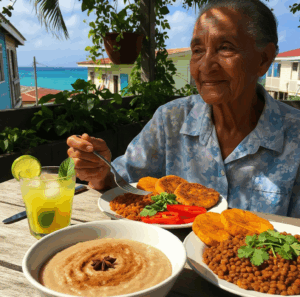 Taking plant-based defaults beyond campus, medical student Millicent Tandoh collaborated with a residential care facility in Dominica to implement entirely plant-based default menus. The facility subsequently switched to coconut milk as the standard option in beverages.
Millicent hosted two workshops for staff and the public, designed a low-fat plant-based elder meal plan, built partnerships with various local groups, and raised awareness of Plant-Based Defaults at this residential care facility.
This project demonstrates how student advocacy can have a significant impact in community healthcare settings.
Calvin Baguma: Kigali Independent University, Rwanda
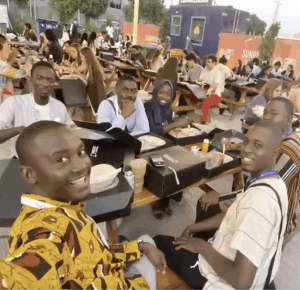
New Roots alumnus Calvin Baguma has made remarkable progress in a challenging context. Despite initial resistance to changing dining habits, Calvin’s educational presentation on the environmental implications of factory farming at the Steven Institute helped build awareness and support for more sustainable campus dining options. This resulted in a 20% increase in plant-based options at his university, increasing the climate-friendly plant-based ratios.
Erica Chow: Monash University, Australia
DefaultVeg Intern Erica Chow convinced the restaurant she worked at to make their online drink orders soy milk by default and add an up-charge for dairy cheese. Erica also circulated a survey to support her campaign, receiving over 60 responses in support of the restaurant eliminating all its dairy products.
Erica’s success demonstrates the power of leveraging consumer voices to drive meaningful change in restaurant menus.
Beyond these remarkable stories, several more DefaultVeg interns made significant strides in transforming campus food systems.
Eve Douglas: St. Mary’s College of Maryland
Eve Douglas successfully convinced the dining team at St. Mary’s College of Maryland to implement exciting new plant-based options, featuring creative labels such as Green Goddess Hummus, Rainbow Salad, and Crispy Tofu.
Suevanny Figueroa: Cal Poly Pomona, CA
Suevanny Figueroa secured a pilot program at Cal Poly Pomona for the ENV Cafe to serve oat milk as the default.
Natalie Powell: Texas State University
Natalie Powell at Texas State University worked with Dr. Amy Weimer to prioritize plant-based options and implement nudges at Nutrition and Foods Department events.
Belle Pellecchia: New York University
Belle Pellecchia created an innovative Green Catering Certification program at NYU, working with the Office of Sustainability to incentivize more sustainable catering practices, and even graded the Stern School of Sustainable Business and NYU SPS Energy, Climate Justice and Sustainability Lab as a GOLD Standard for their predominantly plant-based offerings.
Your Campus and Community Could Be Next
Inspired? The DefaultVeg Internship is more than a program—it’s an invitation to create change. With over 100 students participating across five continents, student leaders receive training in behavioral science, advocacy strategies, and food system transformation while implementing plant-based defaults on their campuses.
If you’re inspired to bring plant-based defaults to your school, contact us or apply for the DefaultVeg Internship Program to access resources, tools, training, and personalized support. Have you witnessed an exciting plant-based default in action? Please contact us to be featured in our next campus dining roundup!
Latest News
See All News39 Campus Wins for Student-Led Plant-Based Nudges & Defaults
Sixty-five students, two semesters each, 39 changes to how campus food gets served. Here’s what the first year-long DefaultVeg 2025-26 cohort accomplished. And the next 90 interns start this Fall.
5 Takeaways on Plant-Based Campus Dining from NACUFS 2026
Five takeaways from our panel and the conference floor, on why the values-behavior gap is a design problem and what students actually order when you get it right.
Storytelling as Climate Strategy: Nudge Workshop with LARC & YP2F
Shredded Shiitake Mushroom Tacos. BBQ Jackfruit Wrap. Tropicali Flan made from kelp. Here’s what happened when BFF brought behavioral science to LA journalists at LARC x YP2F.