Over the last decade, we conducted numerous research studies with our partners and behavioral science experts to identify the most effective ways to shift to plant-based foods in various dining settings.
What these practices share in common is that they use choice architecture—the process of designing how options are presented to people to influence their decision-making.
The Top 5 Nudge Strategies
1. Plant-Based by Default: Make the best choice, the easiest choice
- Serve plant-based foods by default, with animal products available by request, preserving freedom of choice. Many studies have shown that defaults are the most effective strategy for increasing plant-based food consumption while reducing the consumption of animal products.
- Use plant-based patties by default in burgers, with beef or chicken patties available by request.
- Use oat milk, or another plant-based milk by default in coffee or tea drinks. Oat milk is 85% lower in carbon emissions than dairy milk!
- In a buffet, serve plant-based food as the default—serve entirely plant-based entrees and include the option to add meat or dairy to any meal, potentially at an additional cost. Ensure that the base dish is hearty and protein-packed, incorporating plants such as lentils, quinoa, nuts, beans, legumes, tofu, tempeh, seitan, edamame, and sprouted grains, as well as other protein- and fiber-rich fruits and vegetables.
- On event registrations, include copy that informs attendees that your event is offering a plant-based menu. Ask guests to opt in if they wish to receive animal products. (Example copy: “By serving a plant-based menu, we reduced the event’s carbon emissions by up to 500%.”)
2. Climate-Friendly Ratios: Make plant-based foods the most plentiful
- Increase the ratio of plant-based offerings—aim to have 2:1 times more plant-based entrees than meat dishes. (50% or more)
- Make sure that every meat-based dish has a similarly appealing plant-based alternative.
- Encourage chefs to explore plant-based recipes and serve animal products as an add-on or garnish rather than the central portion of the meal.
3. Prime Placement: Make plant-based foods the most visible
- Place plant-based entrees at the front of the buffet.
- List plant-based entrees at the top of the menu.
- Always have the “daily special” or promoted meals be plant-based.
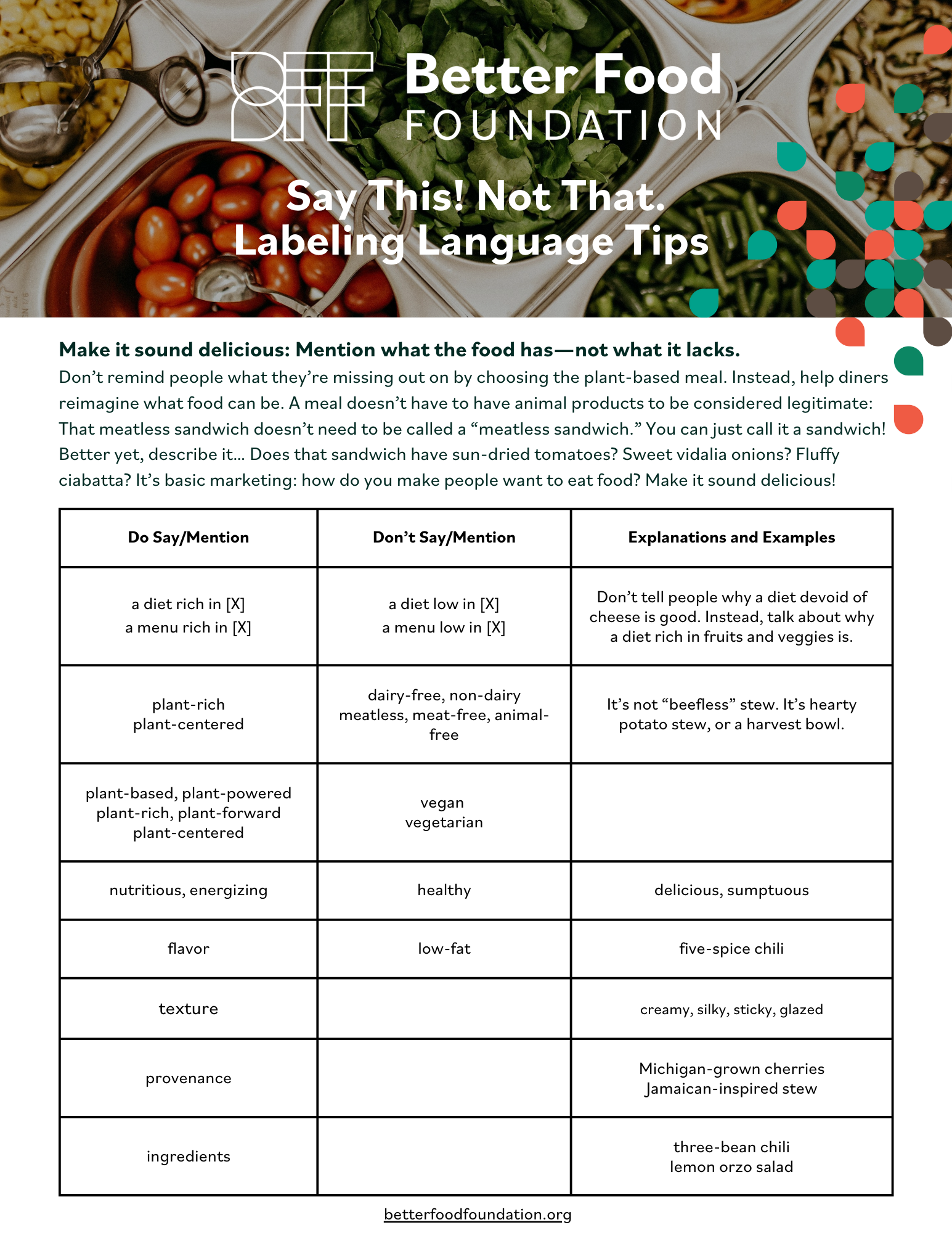
- Use tasty descriptors focused on flavors, textures, and ingredients rather than how healthy or vegan it is.
4. Subtle Substitutions: Make the switch to plant-based ingredients
- Swap plant-based condiments, desserts, mayo, and bread—the high quality of plant-based products nowadays ensures diners won’t notice the difference.
- Switch to using plant-based mayo or frosting in every dish or baked good.
- Any time a recipe can easily be switched to plant-based ingredients (e.g., by using plant-based milk, eggs, or butter), do it—the food items will instantly become more accessible to the growing number of diners with dairy allergies!
5. Tasty Titles: Switch menu titles to sound delicious
- Switch the names of “vegetarian” and “vegan” dishes to tasty titles instead, and use descriptive words focused on flavors, textures, and ingredients, rather than focusing on “healthy” or “plant-based” qualities (e.g., “Cuban Black Bean Soup” rather than “Vegetarian Black Bean Soup”).
- Label dishes that contain meat, dairy, eggs, and other common allergens and indicate plant-based with a small (v).
- Research has shown how we label food impacts customers’ food choices. These simple changes can increase the number of plant-based dishes served. (Download the Say This, Not That: Labeling Language Tips to learn more.)
You can try just one of these tips the next time you serve food—or try more than one! Experiment to find the combination that will make your dining the most inclusive, sustainable, and healthy for all your guests.
That’s just a taste. If you’d like help selecting the right nudge for your food service setting, please get in touch with us. We can help you get started and connect you to our strategic partners who can provide additional support if needed.
Recipes
There are many resources available for chefs and dining teams looking to expand their plant-based menus:
- Visit the Library of Plant-based Guides & Toolkits in our resources folder for a list of recipes from the NGO Network.
- For institutions, Forward Food provides a recipe database and a range of resources, including toolkits and a guide to hosting culinary training sessions.
- For athletes, The Game Changers offers high-protein recipes that Olympic athletes swear by.
- For allergen-friendly recipes, the Physicians Committee for Responsible Medicine offers the Universal Meals Program.
And if you’ve tried any of these practices, let us know the results! We love hearing about your successes and sharing them on our Adoptions List on our website.
To learn more, join a monthly online Nudge Training Session.